Industrial plants often move corrosive liquids through systems where a small leak can halt production, damage equipment, or create serious maintenance work. PFA lined valves help isolate these fluids while keeping the process media separated from the valve body. Their smooth fluoropolymer lining can also support clean operation in applications where contamination matters.
The material alone does not determine suitability. Pressure, temperature, fluid concentration, cycling frequency, and vacuum conditions all affect performance. A valve handling dilute acid at steady temperature may face very different demands from one exposed to hot, concentrated chemicals. Details matter.
This guide introduces ten PFA lined valves for industrial applications, including common designs such as ball, butterfly, diaphragm, and plug valves. It considers practical factors buyers can verify: lining coverage, body construction, seat and seal materials, connection type, operating torque, and available technical documentation. A familiar brand name is not enough. Confirm the published limits against the actual process conditions, and ask the manufacturer about compatibility where data is incomplete. Installation deserves attention too; uneven flange loading or incorrect handling can compromise a sound lining. These points are easy to overlook.
The products are not universally interchangeable, and no ranked list can replace a process review. Use the comparisons as a starting point, then check specifications with qualified engineering or supplier support. A cautious choice often saves time later.
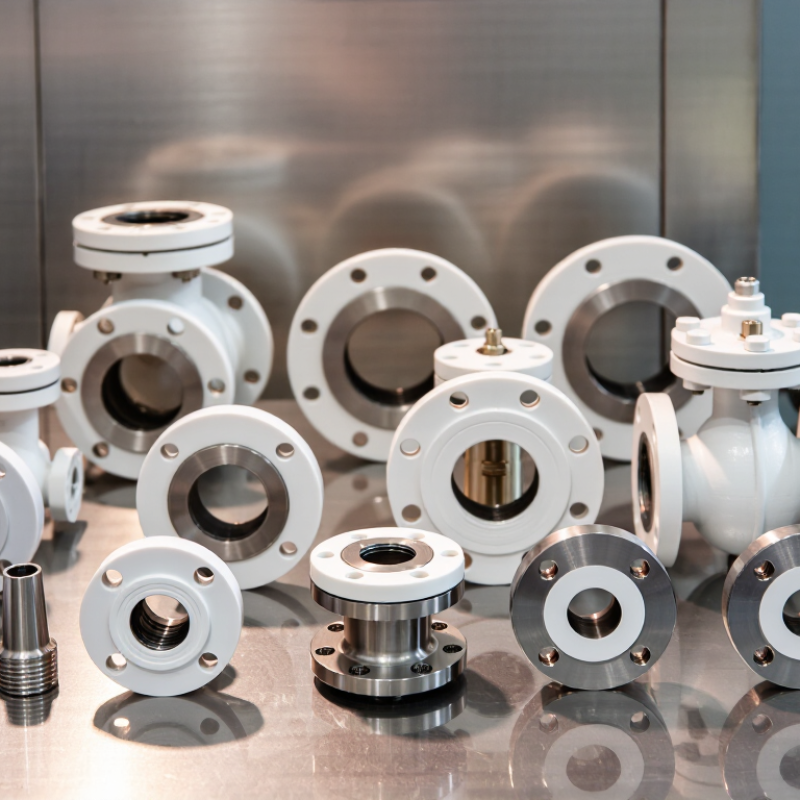
PFA-lined valves rely on a fluoropolymer that resists many corrosive chemicals and has a smooth, non-stick surface. MatWeb’s compiled material records list representative PFA melting points near 305°C. That figure is not a safe operating temperature. ASTM D3418 describes differential scanning calorimetry for measuring polymer melting behavior, but a lab result cannot establish a valve’s pressure rating.
The often-cited 260°C service limit is a practical upper reference, not a guarantee for every valve. Heat can soften the liner and increase creep, especially under pressure. Pressure, liner thickness, temperature cycling, and the valve’s construction all affect performance. One number can mislead. A line operating near 260°C needs the specific valve’s pressure-temperature data, plus checks of seals and connections. Real installations vary; published limits do not remove that uncertainty.
Tips: Treat 260°C as a ceiling to verify, not a target. Review the valve’s pressure derating chart, and allow margin for hot start-ups, shutdowns, and thermal cycling.
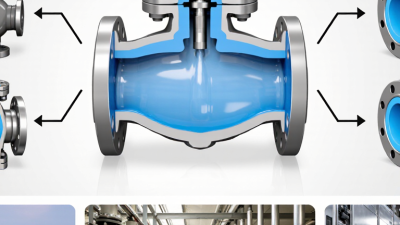
PFA-lined valves pair a strong metal shell with a chemically resistant inner surface. The metal body carries pressure and mechanical loads; the lining separates it from corrosive process fluids. PFA can tolerate many aggressive chemicals, but compatibility depends on concentration, temperature, and exposure time. It is not a universal barrier.
Construction details matter. Before lining, the metal surface is cleaned and prepared so the polymer can bond or mechanically lock in place. The finished layer must cover wetted areas, including corners and transitions where fluid can collect. At the flanges, the lining often extends across the sealing face. That helps prevent direct fluid contact with exposed metal. Small defects matter. A scratch, void, or poorly finished edge can become a path for corrosion beneath the lining.
Sealing also depends on valve design and installation. The disc, seat, stem area, and flange gasket must work together without cutting or distorting the PFA. Tightening bolts unevenly can damage a lined face, even when the valve looks sound from outside. Thermal cycling and vacuum service deserve particular attention because they can stress the bond or lining shape. This detail is easy to underestimate. Inspect lining surfaces during maintenance, and confirm operating limits against the actual service conditions. A lined valve protects its metal body only as well as its coverage and seals allow.
PFA-lined valves help isolate corrosive liquids from metal valve bodies, but the lining is not a cure-all. NACE International’s 2013 IMPACT study estimated corrosion costs at US$2.5 trillion annually, or 3.4% of global GDP. That figure covers many industries, not valves alone. Still, it shows why material selection deserves attention.
Ten types serve different duties: ball, butterfly, plug, diaphragm, gate, globe, check, control, sampling, and drain valves. Ball valves suit tight shutoff; butterfly valves fit larger lines where space matters. Diaphragm designs keep the process fluid away from moving parts, while check valves prevent reverse flow. Sampling and drain valves handle smaller, localized tasks. Not every design suits every service.
Look closely at the details. A sharp pipe edge, trapped solids, or repeated thermal cycling can damage a liner or its sealing interface. PFA offers broad chemical resistance, yet temperature, pressure, vacuum, and permeation limits depend on valve construction. Check the manufacturer’s material data against the actual fluid and operating cycle. A neat compatibility chart may miss mixed chemicals or short cleaning steps. Small details matter.
| No. | Valve Type | Operating Motion | Typical Process Duty | Key Selection Consideration |
|---|---|---|---|---|
| 1 | PFA-Lined Ball Valve | Quarter-turn | On/off isolation in corrosive liquid lines; full-port designs can support relatively low-restriction flow. | Check seat and ball design, pressure rating, and whether the valve is intended for frequent cycling or throttling. Standard ball valves are generally best used for isolation rather than sustained throttling. |
| 2 | PFA-Lined Butterfly Valve | Quarter-turn | Isolation or limited flow control in larger-diameter process lines, including chemical transfer and storage systems. | Disc position affects flow and pressure drop. Confirm liner support, flange compatibility, and shutoff requirements for the specific service. |
| 3 | PFA-Lined Plug Valve | Quarter-turn | On/off service in corrosive process lines where a simple rotary flow path is preferred. | Review plug and body lining construction, operating torque, and the potential for deposits in the flow passage. |
| 4 | PFA-Lined Diaphragm Valve | Linear, handwheel or actuator operated | Isolation and moderate flow regulation in chemical processing, water treatment, and other corrosive liquid services. | The diaphragm separates the operating mechanism from the process fluid. Verify diaphragm material, pressure limits, and compatibility with the process temperature and cycling frequency. |
| 5 | PFA-Lined Gate Valve | Multi-turn linear | On/off isolation where a straight-through flow path is useful when the valve is fully open. | Gate valves are not generally suited to throttling. Consider the space needed for the stem and the possibility of material collecting in body cavities. |
| 6 | PFA-Lined Globe Valve | Multi-turn linear | Flow regulation or isolation where controlled changes in flow are needed. | The flow path creates more pressure drop than a straight-through design. Confirm that the lining and trim are suitable for the expected flow velocity and throttling duty. |
| 7 | PFA-Lined Swing Check Valve | Automatic, hinged disc | Prevents reverse flow in horizontal or suitably configured process piping. | Requires adequate forward flow to open and may be unsuitable where flow reversal or pulsation causes disc slamming. Check installation orientation requirements. |
| 8 | PFA-Lined Lift Check Valve | Automatic, vertically moving disc or piston | Prevents backflow in applications with a suitable flow direction and piping arrangement. | Typically requires a specified installation orientation and sufficient flow to lift the closure element. Confirm allowable pressure drop and cracking pressure. |
| 9 | PFA-Lined Dual-Plate Check Valve | Automatic, spring-assisted plates | Compact backflow prevention in process lines where a short face-to-face dimension is advantageous. | Check compatibility with the piping layout, flow conditions, and required shutoff performance; verify that the specified lining covers all wetted surfaces. |
| 10 | PFA-Lined Control Valve | Actuated, modulating | Automated flow or pressure control in corrosive process systems. | Select the trim and actuator for the process conditions, control range, and expected flow velocity. Lining and temperature limits depend on the complete valve design. |
Selection note: PFA is used as a corrosion-resistant wetted lining in compatible valve designs. Chemical compatibility, temperature and pressure limits, vacuum suitability, and allowable operating conditions depend on the specific valve construction and process service; confirm them with the applicable technical documentation.
ASME Class 150 is a pressure class, not a universal operating-pressure guarantee. ASME B16.5-2020 lists 285 psi at 100°F for Class 150 flanges made from a common Group 1.1 carbon-steel material. That figure describes a flange rating, not necessarily the complete PFA-lined valve. ASME B16.34 also makes pressure-temperature capability dependent on material and design. The liner, body, stem seals, and end connections can each affect the usable limit. That distinction matters.
For a PFA-lined valve, use the manufacturer’s pressure-temperature limits for the exact model, size, and configuration. Check whether the stated pressure is working pressure or a test value; API 598 inspection tests do not, by themselves, establish a valve’s continuous service rating.
Compare the limit with actual process conditions, including temperature swings, vacuum, and pressure surges. A neat table can still mislead: a rating at room temperature may not apply to hot, cyclic service.
Record the required differential pressure and temperature, then confirm both against the valve’s published limits before specifying it. If the documentation is unclear, pause and ask for clarification. The extra check is worthwhile.
For a PFA lined valve, chemical compatibility is the first screening step, not the final decision. Check the exact fluid, concentration, temperature, and exposure duration against current material data. A diluted acid and a concentrated acid may behave differently. Names can mislead. Ask whether cleaning fluids, flushing agents, or occasional process contaminants will also contact the lining.
Temperature and pressure must be assessed together. A valve’s pressure rating can change as operating temperature rises, so review the manufacturer’s rating curve rather than relying on a single maximum figure. Include startup surges, vacuum conditions, and cycling where relevant. Small details matter. For example, a warm line that cools during shutdown may create conditions unlike steady-state operation.
Permeation data deserves close attention when the fluid is hazardous, valuable, or sensitive to contamination. Review test conditions, including temperature, pressure, specimen thickness, and exposure time; results from different methods may not be directly comparable. Also examine liner thickness, flange sealing, stem design, and the possibility of trapped fluid. Compatibility charts are useful, but they cannot resolve every real process condition. If the data is incomplete, document the uncertainty and seek a technical review or controlled material test before specifying the valve.