Why Choose a Plastic Cup Making Machine?
Why Choose a Plastic Cup Making Machine? The answer begins with changing demand across foodservice, retail, and takeaway markets. Grand View Research reports that the global disposable cups market continues to expand as cafés, restaurants, and delivery services seek hygienic, lightweight packaging. Smithers also identifies food packaging as a major driver of rigid plastic demand. These trends create pressure for faster output, stable quality, and controlled production costs.
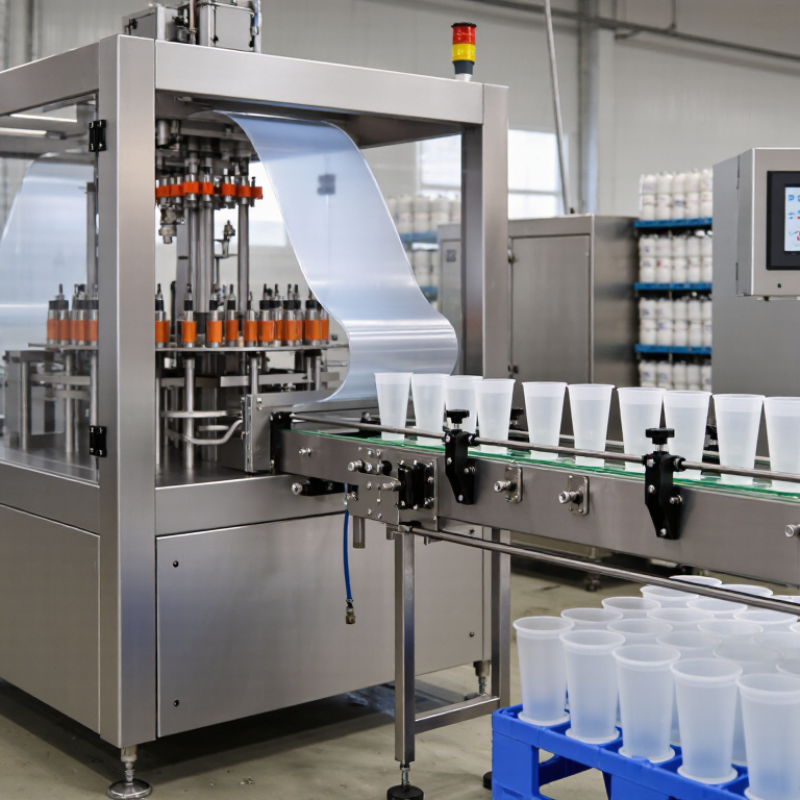
A modern Plastic Cup Making Machine can convert plastic sheets into formed cups through heating, molding, trimming, and stacking. One production line may deliver thousands of cups per hour, depending on cup size, material, mold design, and machine configuration. Consistent forming helps maintain smooth rims, even walls, and reliable stacking. That matters when a cup must hold a hot drink without softening at the rim. Automation can also reduce repetitive handling and improve workplace efficiency.
Small details matter.
Manufacturers can select PP, PET, or other suitable materials based on product requirements and local regulations. Servo control, real-time temperature monitoring, and automatic fault detection can improve repeatability. However, higher speed does not automatically mean better performance. Energy consumption, mold maintenance, material waste, and operator training still require careful review. This is where many purchasing decisions become less simple than expected. A machine may look impressive during a demonstration, yet its long-term value depends on uptime, technical support, spare parts, and verified production data. Buyers should compare trial results, not only brochures. Reliable suppliers should explain limitations clearly, because practical transparency often matters more than attractive promises.
Market Need: Packaging Takes 39.9% of EU Plastics Demand (2022)
Why Choose a Plastic Cup Making Machine?
Packaging represented 39.9% of European plastics demand in 2022, according to PlasticsEurope’s Plastics—The Fast Facts 2023. European plastics demand reached approximately 54.6 million tonnes that year. Packaging therefore consumed nearly 21.8 million tonnes of material. This figure measures demand, not finished cups alone. However, it clearly shows why efficient packaging production remains commercially important.
A plastic cup making machine can convert heated sheets into consistent cups through thermoforming. Operators can adjust temperature, pressure, forming time, and mold settings for different cup sizes. Stable production reduces uneven rims, thin walls, and unnecessary rejects. That matters when every gram affects material cost. In a practical factory, inline trimming and counting can also simplify packing and quality checks.
The market need is real.
Eurostat reported 35.9 kilograms of plastic packaging waste per person in the European Union in 2021. This creates pressure for better material efficiency, clearer recycling systems, and more responsible product design. A machine alone cannot solve the waste problem. That would be an easy, but incomplete, claim. Manufacturers still need suitable materials, accurate process control, and realistic recycling plans. Some production lines also require frequent mold changes, which can reduce output during setup. Careful testing remains essential. Industry data supports investment, but each factory should examine cup demand, labor costs, energy use, and local packaging requirements before choosing equipment.
Why Choose a Plastic Cup Making Machine? - Market Need: Packaging Takes 39.9% of EU Plastics Demand (2022)
Key European plastics-market indicators showing why efficient, flexible, and resource-conscious plastic cup production is relevant.
| Market Dimension | Verified Data | Year | Why It Matters for Plastic Cup Production | Source |
| Packaging share of EU plastics demand | 39.9% | 2022 | Packaging was the largest end-use sector, creating strong demand for high-volume and consistent cup production. | Plastics Europe, Plastics - the Fast Facts 2023 |
| Building and construction share | 20.5% | 2022 | Packaging demand was nearly twice the demand of the second-largest sector, highlighting the importance of packaging-focused equipment. | Plastics Europe, Plastics - the Fast Facts 2023 |
| Automotive share | 8.3% | 2022 | Packaging remained a substantially larger plastics end-use market than automotive applications. | Plastics Europe, Plastics - the Fast Facts 2023 |
| Electrical and electronic share | 6.2% | 2022 | The broad packaging market supports investment in specialized forming equipment rather than relying only on diversified plastics applications. | Plastics Europe, Plastics - the Fast Facts 2023 |
| EU packaging waste generated per person | 186.5 kg per person | 2022 | High packaging consumption increases the need for material-efficient designs, lightweighting, and controlled production waste. | Eurostat, Packaging waste statistics |
| EU plastic packaging recycling rate | 41.5% | 2022 | Recycling targets and resource-efficiency expectations encourage compatible materials, precise wall thickness, and reduced scrap. | Eurostat, Packaging waste statistics |
| EU packaging waste recycling target for plastic | 50% by 2025; 55% by 2030 | EU targets | Manufacturers may benefit from machines that support repeatable quality, lightweight products, and efficient use of recyclable materials. | European Commission, Packaging and packaging waste rules |
| Typical production advantages of automated forming | High repeatability, multi-cavity output, and programmable control | Operational consideration | Automation can help standardize cup dimensions, reduce manual handling, support faster changeovers, and improve production planning. | Manufacturing process principle |
Note: Percentages refer to plastics demand by end-use sector in Europe, while recycling figures refer to EU packaging waste. Values may be revised by statistical authorities as new data becomes available.
How It Works: Heat, Form, Trim, and Stack Cups in a Continuous Cycle
Why choose a plastic cup making machine? For high-volume production, its value lies in a steady, repeatable cycle. A plastic sheet enters the heating section, where infrared elements soften it without burning the surface. Temperature sensors monitor each heating zone. The target is flexible material, not liquid plastic. That distinction matters.
As the softened sheet reaches the forming station, vacuum pressure pulls it against precision molds. Some systems add air pressure for sharper rims and deeper shapes. Cooling channels stabilize each cup before trimming begins. A cutting tool removes the surrounding web and leaves a clean edge. Trim pressure must stay balanced. Too little creates rough rims. Too much can deform the cup. The finished cups move through a conveyor and enter a stacking unit. Guides align them into uniform columns. A counter records each stack, while an operator checks dimensions, weight, and surface clarity at set intervals.
In daily operation, small adjustments often decide the result. Sheet thickness, mold temperature, and cycle speed must work together. One setting rarely fits every material. The process is efficient, but it is not flawless. Dust, uneven heating, or a dull cutting blade can cause rejects. Experienced technicians inspect these details before increasing speed. I have found that stable production depends less on maximum speed than controlled consistency. That view may sound cautious. It can prevent expensive interruptions.
Production Capacity: Compare 30,000–100,000 Cups per Hour by Model
Why Choose a Plastic Cup Making Machine?
Production capacity often determines whether a plastic cup line meets delivery targets. Models rated at 30,000 to 100,000 cups per hour cover very different operating needs. A 30,000-cup model produces about 8 cups per second. A 100,000-cup model reaches nearly 28 cups per second. That difference matters during peak orders.
However, rated output is not always actual output. Mold cavities, forming time, cooling efficiency, material thickness, and automation affect results. Experienced operators also track startup waste, changeovers, rejects, and maintenance stops. A machine rated at 100,000 cups per hour may deliver less in daily production. The gap is real. Buyers should request tested output under their cup size and resin conditions.
PlasticsEurope’s Plastics – the Fast Facts 2023 reported that packaging represented 39.6% of European plastics demand in 2022. This supports the continuing importance of efficient packaging production, but volume alone should not guide equipment selection. PMMI industry research also emphasizes automation, uptime, and workforce efficiency as major packaging investment factors. A practical comparison should calculate usable cups per hour, not only the headline figure. For example, 30,000 reliable cups may outperform a faster machine with frequent stoppages. I would also question optimistic factory data. Ask for cycle-time records, sample quality results, and energy use before committing.
Why Choose a Plastic Cup Making Machine?
Production capacity comparison by machine configuration, from approximately 30,000 to 100,000 cups per hour.
Higher-capacity configurations are typically suited to continuous, high-volume production. Actual output varies with cup diameter, wall thickness, raw material, mold cavities, cycle time, and operating efficiency.
Material Choice: PP, PET, and rPET for Weight, Clarity, and Recycling
Why Choose a Plastic Cup Making Machine?
Material selection directly affects cup weight, clarity, stiffness, and recycling value. Polypropylene (PP) produces lightweight cups with strong heat resistance and good impact performance. It suits yogurt, dessert, and takeaway applications. However, PP usually looks less transparent than PET. That visual difference matters on retail shelves.
PET offers high clarity and a crisp surface, making fruit, salads, and cold drinks look more attractive. Its forming window can be narrower, so sheet temperature and plug-assist settings require careful control. According to the National Association for PET Container Resources, the United States collected about 1.7 billion pounds of PET bottles for recycling in 2022. The reported bottle recycling rate was 28.9%. Collection still has room to improve.
rPET can reduce dependence on virgin resin, but it is not automatically perfect. Feedstock color, moisture, and contamination may affect cup appearance and forming stability. A plastic cup making machine should support accurate heating zones, stable sheet feeding, and quick mold adjustment. Small temperature errors can create thin rims or uneven walls. Not always visible.
The European Plastics industry report “Plastics – the Fast Facts 2023” identifies packaging as the largest plastics-use sector in Europe. This reinforces the need for material-efficient forming. In practical trials, reducing cup weight sounds attractive, yet an overly thin base may deform during stacking. That trade-off deserves testing, not assumptions. A reliable choice balances material performance, recycled content, machine capability, and the real recycling system available after use.
Investment Criteria: Track Scrap, Energy, Labor, and EU 2030 Targets
Why Choose a Plastic Cup Making Machine?
A plastic cup making machine should be judged by operating data, not its purchase price. Track scrap after trimming, stacking, and quality checks. A small scrap increase can erase expected profit within months. Record electricity use per thousand cups, including heating zones, compressors, and cooling systems. Compare these figures during normal production, not only during demonstrations. Labor also matters. One operator may manage feeding, inspection, and packing, but staffing needs can change with cup size and automation.
My first costing model was too optimistic. I underestimated setup waste and cleaning time. That mistake showed why an investment needs a trial run with real material and target cup specifications. Review machine records, maintenance reports, and sample production results with an experienced engineer. These details provide stronger evidence than sales estimates.
Tips: Measure scrap by batch. Install energy meters. Calculate labor hours per 10,000 cups. Ask for changeover timings. Check whether recycled content affects forming stability. For EU 2030 targets, assess energy efficiency, material efficiency, and recyclability requirements early. Rules and customer expectations may develop before the machine reaches its full service life. Keep documented test results and supplier declarations. Do not assume compliance from a general statement. Verify the current requirements for your market. A cheaper machine can become expensive when waste, energy peaks, and manual corrections remain invisible.