
Choosing the right Flat Laminating Machine can shape production quality, labor efficiency, and long-term operating costs. Global buyers often compare speed first. That can be a mistake. A stable 12-meter-per-minute line may outperform a faster machine with uneven heat or unstable pressure.
As laminating-equipment specialist Dr. Martin Keller explains, “Reliable lamination begins with controlled heat, consistent pressure, and repeatable timing.” These three factors appear in every serious evaluation. Buyers should inspect heater-zone accuracy, nip-roller alignment, adhesive compatibility, and cooling performance. A 0.3-millimeter film may look smooth during testing, yet develop bubbles after several hours. Small details matter.
This guide reviews ten machines for different production environments. Some suit signage workshops. Others support furniture panels, printed boards, insulation materials, or high-volume industrial work. We consider working width, maximum substrate thickness, control systems, energy consumption, maintenance access, and technical support. Voltage compatibility also deserves attention when equipment crosses borders.
No ranking is perfect. Specifications can hide practical weaknesses. A polished touchscreen cannot compensate for poor roller cleaning. A low purchase price may become expensive after repeated service delays. Buyers should request sample runs, inspect finished edges, and ask for spare-part delivery times. Those steps take effort. They prevent costly surprises.
The strongest Flat Laminating Machine is not always the largest or fastest. It is the one that matches material, workload, operator skill, and local service conditions. That judgment requires evidence, not impressive brochures alone.
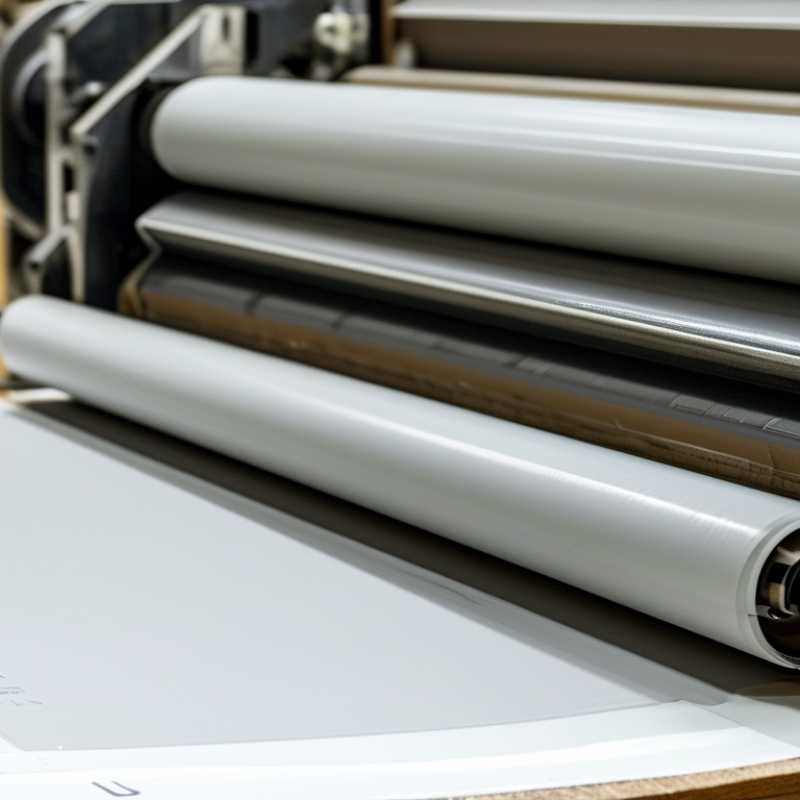
Flat laminating machines bond two or more flat materials into one stable sheet. Common layers include paper, plastic film, foil, fabric, and printed board. The machine places these layers between flat plates. Heat, pressure, and controlled dwell time activate the adhesive or thermal coating.
During operation, an operator aligns the sheets, removes trapped air, and adjusts temperature and pressure. The upper platen then closes evenly. Heat softens the bonding layer, while pressure improves contact across the surface. After cooling, the laminated sheet becomes more rigid and resistant to moisture, scuffing, or tearing. According to Smithers’ 2024 flexible packaging research, global flexible packaging demand is projected to exceed US$300 billion by 2028. This growth increases the need for accurate, repeatable lamination.
Tips: Check adhesive compatibility before production. Use a test sheet first. Measure platen temperature at several points, not only on the display. Uneven heat can create bubbles, cloudy areas, or weak edges. The Packaging Machinery Manufacturers Institute also reports that automation and quality monitoring remain major investment priorities in packaging operations. However, automation cannot correct poor alignment. In my experience, a clean surface often matters more than a higher pressure setting. Small dust particles can become visible defects. Flat laminators look simple, but setup decisions are not. Dwell time may need adjustment after material thickness changes. One setting rarely suits every substrate.
When comparing the top 10 flat laminating machines, start with usable panel size. A 1,600 by 3,200 millimeter table handles larger boards with fewer repositioning steps. Check the maximum material thickness as well. Some machines accept only thin sheets, while others manage composite panels up to 50 millimeters.
Pressure capacity strongly affects bonding quality. Review the rated pressure, pressure uniformity, and adjustment range. Uneven pressure can leave bubbles near corners. Heating specifications deserve equal attention. Compare maximum temperature, heating zones, warm-up time, and temperature accuracy. Independent zones may reduce energy waste during smaller jobs. They can also complicate maintenance.
Production teams should examine cycle time, vacuum performance, and pump capacity. A stable vacuum level matters more than an impressive peak figure. Ask for measured noise levels and inspect filter access before purchase. Electrical requirements vary by region, so verify voltage, frequency, and installed power with a qualified technician. Safety interlocks, emergency stops, and guarded heating areas should be clearly documented.
From practical evaluations, I also compare control systems and service access. A touchscreen looks useful, but simple manual controls may survive harsh workshop conditions better. That is not always true. Review spare-part availability, training support, warranty terms, and certification documents. Record actual test results, not only brochure claims. A machine that appears slower may deliver fewer rejects, which can lower the real production cost.
Top 10 Flat Laminating Machines for Global Buyers
Machine Types and Their Best Industrial Applications
Flat laminating machines differ mainly by adhesive method, heating system, and material handling. The ten most useful types include thermal, hot-melt, wet-glue, solventless, dry-film, UV, pressure-sensitive, vacuum, roll-to-roll, and extrusion laminators. Thermal machines suit menus, labels, and printed cartons. Hot-melt models handle furniture panels, insulation boards, and protective films. Wet-glue systems remain practical for paperboard and wood-based products, especially where investment budgets are limited. They can be slower.
Solventless laminators support flexible packaging with lower solvent emissions. Dry-film units fit electronics, printed circuits, and precision graphics. UV laminators work well with short-run decorative sheets, while pressure-sensitive machines laminate labels and adhesive films without curing. Vacuum laminators are valuable for glass, solar panels, and uneven composite surfaces. Roll-to-roll systems serve high-volume packaging, while extrusion laminators combine polymer film with paper, foil, or woven substrates. Operators should check web tension carefully. Small wrinkles become costly rejects.
Smithers’ report, The Future of Flexible Packaging to 2029, identifies continued demand for lightweight, recyclable, and barrier packaging, increasing pressure on coating and laminating accuracy. Grand View Research also reports steady growth in the global packaging machinery sector, supported by automation and material efficiency. These trends favor machines with closed-loop tension control, infrared heating, recipe storage, and quick-change rollers. However, automation is not always the best answer. For a regional converter producing short batches, a simpler flatbed thermal model may reduce downtime and training costs. Test actual films, adhesive weights, curing times, and operator skill before selecting from the top ten.
Top 10 Flat Laminating Machines for Global Buyers
Global Buying Factors: Capacity, Compliance, and Support
Capacity should match real production, not brochure speed. A machine rated at 80 meters per minute may run slower with thick board, uneven adhesive, or frequent format changes. Ask for tested output on your actual substrates. Smithers’ Future of Global Packaging to 2028 values the global packaging market above US$1 trillion, increasing pressure for stable, scalable equipment. Energy use also matters. Record kilowatt-hours per production batch, not only maximum speed. A faster line can still cost more.
Compliance varies by destination. Confirm electrical safety, guarding, emergency stops, and documentation before purchase. IEC 60204-1 and ISO 12100 provide useful technical references for machinery safety. Environmental rules deserve equal attention. The European Commission’s packaging policy increasingly emphasizes recyclability and material reduction. A laminate that performs well may become difficult to recycle. That risk is easy to overlook. Request adhesive specifications, material declarations, and test records in clear English.
Tips: Demand a factory acceptance test using your film, board, and adhesive. Check bonding strength after heat, humidity, and 24-hour storage. PMMI’s 2024 State of the Industry reporting identifies labor availability and automation as continuing investment pressures. Therefore, inspect recipe storage, cleaning time, and operator training. Support is often less visible than capacity. Confirm spare-part lead times, remote diagnostics, local service coverage, and training hours. I would also ask for three customer references in similar climates. One reference is not enough.
Comparative reference table for flat-panel laminating equipment. The specifications represent common commercial machine configurations and should be verified against the final supplier quotation, local electrical requirements, and required certification documents.
| Rank | Machine Profile | Typical Working Area | Recommended Output Capacity | Material Thickness Range | Heating and Pressure System | Suitable Materials | Global Compliance Considerations | Recommended Buyer Type | Support Requirements to Confirm |
|---|---|---|---|---|---|---|---|---|---|
| 01 | Large-Format Vacuum Flat Laminator | 1,300 × 2,500 mm | 35–70 panels per shift | 3–40 mm | Electric platen heating; silicone membrane; vacuum pressure up to approximately 0.09 MPa | Decorative panels, doors, furniture boards, PVC films, veneers | CE pathway Emergency-stop circuit Low-voltage documentation | High-volume furniture and interior-panel manufacturers | Installation supervision, vacuum-system training, spare membrane availability, remote diagnostics |
| 02 | Double-Station Flat Membrane Press | 1,300 × 2,500 mm per station | 60–120 panels per shift | 3–35 mm | Two alternating worktables; heated upper platen; programmable cycle control | Cabinet doors, MDF panels, HPL sheets, wood veneer, thermoplastic films | CE or UKCA route Guarding assessment Electrical schematic | Production lines requiring reduced loading and unloading downtime | Operator training, PLC backup, heating-element replacement procedure, local service response time |
| 03 | Compact Single-Table Vacuum Press | 1,000 × 2,000 mm | 15–35 panels per shift | 2–30 mm | Single heated platen; vacuum pump; manual or semi-automatic cycle selection | Small furniture components, decorative boards, signage substrates | CE documentation IP-rated controls Grounding verification | Small and medium-sized workshops with limited floor space | Clear operating manual, commissioning checklist, pump maintenance schedule, telephone support |
| 04 | Hot Flat Press for HPL and Veneer | 1,300 × 2,500 mm | 25–55 panels per shift | 4–60 mm | Hydraulic closing system; heated steel platens; adjustable pressure and dwell time | High-pressure laminate, natural veneer, plywood, particleboard | CE machinery review Hydraulic safety controls Pressure-hose documentation | Panel producers focused on rigid laminates and veneer work | Hydraulic maintenance training, pressure calibration records, platen-levelness inspection, spare seals |
| 05 | Automatic Panel Laminating Line | 1,300 × 3,000 mm | 100–220 panels per shift | 3–35 mm | Automatic loading and unloading; heated press section; conveyor-based material handling | Furniture panels, wall cladding, cabinet components, decorative sheets | CE or UKCA route Machine-risk assessment Safety interlocks EMC documentation | Industrial manufacturers with repeatable batch production | Factory acceptance test, integration drawings, preventive-maintenance plan, controls-engineer availability |
| 06 | Cold-Roller Flat Laminator | 1,600 × 3,200 mm | 80–180 panels per shift | 1–25 mm | Adjustable nip rollers; pressure-controlled lamination; no heated platen required for pressure-sensitive films | Self-adhesive films, decorative foils, graphic laminates, thin boards | CE electrical review Guarding and pinch-point protection RoHS/REACH material declarations | Signage, graphics, retail-display, and lightweight-panel producers | Roller-alignment training, adhesive compatibility guidance, replacement roller specifications, remote support |
| 07 | Membrane Press with Multi-Zone Heating | 1,300 × 2,500 mm | 35–75 panels per shift | 3–45 mm | Independent heating zones; silicone membrane; recipe-based temperature control | 3D PVC films, textured foils, veneer, shaped cabinet fronts | CE pathway Thermal safety limits Control-panel documentation | Manufacturers producing profiled or three-dimensional components | Recipe setup assistance, membrane-life guidance, temperature calibration, technical translation support |
| 08 | Laboratory and Sample Flat Laminator | 600 × 900 mm | 5–20 test panels per shift | 1–20 mm | Compact heated platen; manual pressure adjustment; short-cycle laboratory controls | Film trials, adhesive testing, laminate samples, educational prototypes | CE or equivalent local route Thermal protection Electrical safety test | R&D departments, universities, laboratories, and product-development teams | Calibration certificate, test-method guidance, data-logging option, replacement heater availability |
| 09 | Heavy-Duty Hydraulic Flat Laminating Press | 1,600 × 3,200 mm | 20–50 heavy panels per shift | 10–100 mm | High-force hydraulic cylinders; heated platens; programmable pressure-hold cycle | Thick composite boards, structural panels, fire-rated boards, industrial laminates | CE machinery assessment Hydraulic conformity documents Overpressure protection | Industrial panel plants handling thick or high-density substrates | Foundation and loading requirements, hydraulic service training, pressure certification, onsite commissioning |
| 10 | Energy-Efficient Servo Flat Laminator | 1,300 × 2,500 mm | 45–95 panels per shift | 3–40 mm | Servo-controlled pressure; insulated platen; variable-speed vacuum and heating management | Furniture panels, architectural boards, recycled substrates, decorative films | CE or UKCA route EMC verification Energy-data documentation RoHS/REACH declarations | Export-oriented factories prioritizing repeatability and energy control | Digital manuals, software backups, energy-performance test method, cybersecurity and remote-access policy |
Selecting a flat laminating machine starts with the material, not the advertised speed. Define film type, sheet size, adhesive method, and daily production volume. A 2024 PMMI industry report valued U.S. packaging machinery shipments at approximately $10.2 billion in 2023. This investment scale makes careful equipment selection essential. Do not equate higher speed with better performance.
Start with samples. Test your actual paper, board, film, and ink coverage before purchasing. Check whether the heating system maintains stable temperatures across the working width. Uneven heat can create silvering, wrinkles, or weak edges. Review pressure adjustment, roller hardness, feeding accuracy, and changeover time. Operators should reach controls without crossing heated surfaces. Safety guards and emergency stops require practical inspection, not just document review.
Energy consumption also matters. The Smithers report, The Future of Digital Print for Packaging to 2029, identifies efficiency and shorter production runs as major packaging priorities. Ask suppliers for measured power data under comparable workloads. Request noise readings and maintenance intervals. In my experience, a machine that is slightly slower can deliver fewer rejects and lower labor costs. That assumption still needs proof. Compare finished samples after 24 hours, not immediately. Adhesive curing and curling may appear later. A reliable trial should include start-up, continuous running, cleaning, and an intentional error test.