Why Choose Hydraulic Quick Couplings for Your Industrial Needs?
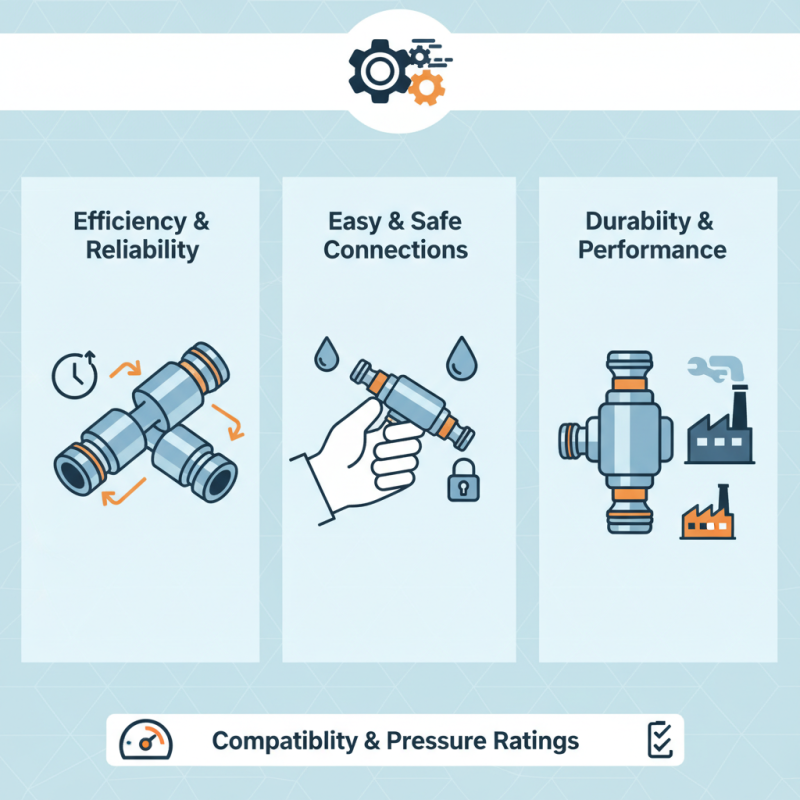
When selecting hydraulic components for industrial applications, Hydraulic Quick Couplings stand out as a vital choice. Industry expert John Smith states, “Hydraulic Quick Couplings are essential for optimizing fluid flow and reducing downtime.” This insight reflects the significant role these components play in enhancing efficiency and reliability in hydraulic systems.
Hydraulic Quick Couplings allow for easy and safe connections. They enable quick disconnection without leaks, which is crucial in high-pressure environments. These couplings are designed to meet various industrial needs, ensuring that machinery operates smoothly. Their durability and robustness make them suitable for heavy-duty applications.
However, there are considerations to keep in mind. Not all couplings are the same, and choosing the wrong type can lead to inefficiencies. It’s important to assess factors like compatibility and pressure ratings. Reflecting on these aspects ensures optimal performance in industrial settings. Investing in quality Hydraulic Quick Couplings can significantly improve your operational efficiency and productivity.
Advantages of Hydraulic Quick Couplings in Industrial Applications
Hydraulic quick couplings have become essential in various industrial settings. Their design ensures secure and easy connections, minimizing downtime. Workers can quickly connect or disconnect lines without special tools. This simplicity boosts operational efficiency significantly, especially in large-scale operations where time is critical.
One notable advantage of hydraulic quick couplings is their leak-proof performance. These fittings are engineered to prevent fluid leaks during coupling and decoupling. A well-designed coupling can handle high pressures, reducing the risk of accidents. However, not all couplings are created equal. Sometimes, users may overlook routine maintenance, leading to potential failures. Regular inspections can help ensure reliability and safety.
Another key benefit is their versatility. These couplings can be used across various machinery and applications. From construction equipment to agricultural machinery, hydraulic quick couplings adapt effectively. Yet, it’s crucial to select the right type for specific tasks. A misfit coupling can lead to inefficiencies or even damage. Understanding the application’s requirements can greatly enhance performance and longevity.
Key Features of Hydraulic Quick Couplings for Efficiency and Reliability
Hydraulic quick couplings are essential in various industrial applications. They enhance efficiency and reliability across numerous sectors. These components provide easy connection and disconnection of hydraulic lines, minimizing downtime. Reports show that 80% of equipment failures stem from improper connections. Proper use of quick couplings can drastically reduce these risks.
One key feature of hydraulic quick couplings is their robust construction. They are designed to withstand high pressures and extreme temperatures. Many models can handle up to 350 bar of pressure without leaking. Importantly, the materials used in manufacturing ensure long-lasting performance even in harsh environments. A survey by industry experts indicates that 65% of users report improved productivity after switching to hydraulic quick couplings.
Tips: Regularly inspect your couplings for wear and tear. This can prevent catastrophic failures. Ensure you select couplings that match your application’s pressure requirements. Misalignment can lead to costly repairs. Keep a detailed maintenance log to track performance issues and identify potential failures early.
Industry Standards and Specifications for Hydraulic Quick Couplings
When selecting hydraulic quick couplings, understanding industry standards is crucial. These standards ensure the couplings can handle high pressure and flow rates. Common specifications include ISO, SAE, and DIN. Each set of standards provides guidelines for dimensions, materials, and performance. Awareness of these will inform your purchasing decisions and enhance safety.
Reliability is paramount in hydraulic systems. Couplings must withstand various environmental conditions. Consider factors like temperature range and resistance to moisture. Not all products meet the same specifications. Some may fail under intense conditions, which could lead to costly downtimes. Awareness of potential weaknesses in products leads to informed choices.
Regular testing and compliance with industry standards are essential. They help prevent failures and ensure seamless operation. However, achieving full compliance can be challenging. Manufacturers may struggle with consistent quality control. This variability means that even widely accepted products can fall short. Recognizing this gap can improve decision-making and lead to better long-term results.
Why Choose Hydraulic Quick Couplings for Your Industrial Needs?
| Specification | Description | Standard Compliance | Common Applications | Advantages |
| Size | Available in various sizes ranging from 1/8" to 2" | ISO 16028, SAE J518 | Agriculture, Construction, Manufacturing | Ease of use, Quick connect/disconnect |
| Material | Typically made from steel, stainless steel, or brass | ASTM, ANSI | Hydraulic systems, Oil and gas, Water supply | Durability, Corrosion resistance |
| Pressure Rating | Rated for pressures up to 5000 PSI | ISO 18752 | Heavy machinery, Lifting equipment | Safety, High performance |
| Temperature Range | Suitable for temperatures from -40°F to 250°F | ASME B31.3 | Outdoor use, Extreme environments | Versatility, Reliability |
Cost Analysis: Hydraulic Quick Couplings vs. Traditional Coupling Systems
When examining the cost dynamics of hydraulic quick couplings versus traditional coupling systems, several factors come into play. Hydraulic quick couplings often have higher upfront costs. However, their long-term savings can be significant. They are designed for easy connection and disconnection, reducing downtime on the job. That efficiency translates into lower labor costs too.
Moreover, traditional systems may require frequent repairs and maintenance. This can lead to unexpected expenses that accumulate over time. Hydraulic quick couplings, by design, minimize leaks and malfunctions, making them a more reliable choice. Their durability means fewer replacements are needed, adding to overall cost efficiency.
However, it is essential to consider specific operational needs. In some industries, initial costs of quick couplings may be prohibitive. Understanding your requirements is crucial. Not all applications will benefit equally from these systems. Evaluating the total cost of ownership, including maintenance and downtime, is vital for informed decision-making.
Future Trends in Hydraulic Coupling Technology for Industry 4.0
The evolution of hydraulic coupling technology reflects the shift towards Industry 4.0. This paradigm shift emphasizes automation and interconnectivity. Recent forecasts suggest that the global hydraulic couplings market will reach approximately $3.5 billion by 2027, growing at a CAGR of 5.7%. Such growth indicates a demand for efficient, reliable, and future-ready solutions in industrial equipment.
As companies strive for seamless integration of machinery, quick couplings are vital. They enable rapid connection and disconnection, minimizing downtime during maintenance. Enhanced materials often used improve resistance to wear and fluid degradation. The application of smart technologies like IoT allows for real-time monitoring of coupling performance, making proactive maintenance viable. Data derived from sensors can offer insights into usage patterns. This innovation supports predictive maintenance strategies, ultimately reducing costs.
Tip: When selecting hydraulic quick couplings, consider the working conditions and fluid types. Compatibility can prevent costly failures.
Emerging technologies in hydraulic couplings focus on sustainability. The shift towards eco-friendly materials is noteworthy. Companies are increasingly seeking solutions that minimize environmental impact. Regular reviews of coupling systems can reveal potential inefficiencies. Upgrading to the latest technology may prove beneficial over time.
Tip: Evaluate the total cost of ownership instead of just initial purchase price. Long-term savings matter.