
Choosing a China-based surgical dressing supplier requires more than comparing prices or reading a “best manufacturer” claim. Surgical Dressing Pads vary in material, absorbency, size, edge finish, and sterile or non-sterile packaging. These details affect how a product fits a buyer’s intended use and supply process. Small differences matter.
A capable manufacturer should explain its materials, production controls, and inspection steps in clear terms. Buyers can ask how incoming materials are checked, how pads are cut and packed, and how batches are identified. Packaging samples, product specifications, and relevant test documentation help make comparisons practical. Look closely at sealing and labeling, too. A neat sample is useful, but it does not prove that every production batch will be identical.
The right supplier also communicates realistic lead times, order quantities, customization limits, and shipping arrangements. Confirm that product documentation matches the exact pad and packaging being quoted. Requirements can differ by market, so buyers should verify applicable rules with qualified professionals before ordering. No single factory suits every project. A lower price may come with a trade-off in flexibility, inspection detail, or delivery speed. That is worth weighing. This guide introduces key points for evaluating manufacturers and suppliers in China, while recognizing that supplier claims deserve careful review. A thoughtful choice starts with specific questions, not broad promises.
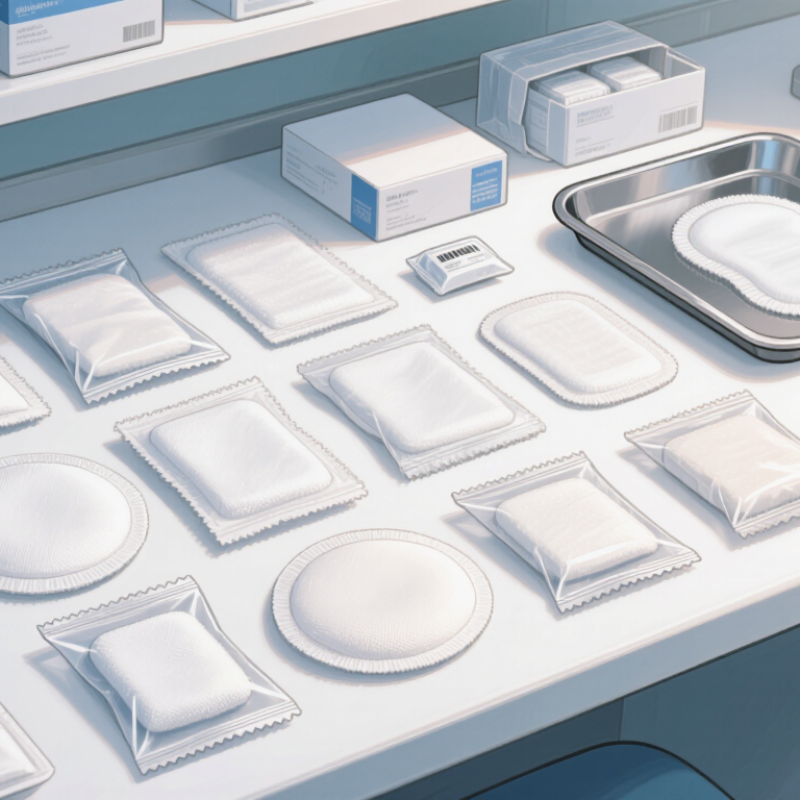
A surgical dressing pad is an absorbent cover placed over a wound to manage fluid and protect the surrounding area. Many designs combine a soft wound-contact surface with a more absorbent inner layer. Some are sterile and ready to apply; others need a separate contact layer. The right choice depends on the wound, its drainage, and clinical guidance.
A pad helps contain exudate and reduces friction from clothing or bedding. It can also make routine wound checks more manageable. It does not treat infection by itself. That distinction matters.
The World Health Organization’s 2022 Global Report on Infection Prevention and Control estimates that 7 in 100 patients in acute-care hospitals in high-income countries, and 15 in 100 in low- and middle-income countries, acquire at least one healthcare-associated infection. These figures describe broad hospital infections, not infections prevented by dressing pads.
In practice, clinicians assess the wound’s size, location, and moisture before choosing a dressing. A pad that is too small may let fluid reach the skin; one that is too absorbent may dry the wound surface. Changing a dressing too often can disturb healing tissue, while leaving a saturated pad in place is also unwise. Follow the care team’s instructions, and report worsening pain, spreading redness, or unusual discharge. Small details matter.
China Best Surgical Dressing Pads Manufacturer and Supplier
Common Types and Materials Used in Surgical Dressing Pads
Surgical dressing pads vary by wound size, fluid level, and contact needs. Sterile woven gauze, commonly made from cotton, suits routine coverage and light-to-moderate absorption. Its open weave allows airflow, but fibers may cling to a moist wound. Nonwoven pads often combine viscose or rayon with polyester. They can feel softer and shed fewer fibers, though quality depends on construction.
For heavier drainage, abdominal pads use a thick absorbent core, often cellulose or cotton, beneath a protective outer layer. Non-adherent pads add a smooth contact surface, sometimes using a silicone-coated layer, to reduce sticking during removal. The feel matters. No material wins every time. Buyers should compare absorbency, linting, sterilization status, and packaging integrity, not just fabric names.
WHO’s 2018 Global Guidelines for the Prevention of Surgical Site Infection cite an estimated 11.8 infections per 100 surgical procedures across studies in low- and middle-income countries. This figure describes infection burden, not dressing performance. It does underline why consistent sterile handling and clear product specifications matter. A practical caveat: pad choice alone cannot replace wound assessment or clinical protocols.
| Dressing Pad Type | Common Materials | Key Characteristics | Typical Use | Selection Considerations |
|---|---|---|---|---|
| Woven Gauze Pad | Usually cotton yarn woven into a mesh; supplied in multiple layers and sizes. | Absorbent and breathable. The open weave allows fluid to pass through, but fibers may adhere to a wound if the gauze dries in place. | Absorbing blood or exudate, cleansing, and covering wounds when an appropriate secondary dressing is used. | Choose the size and ply for the wound and expected fluid level. Check whether sterile packaging is required; use care when removing from delicate tissue. |
| Nonwoven Sponge Pad | Commonly rayon, polyester, or a blend of synthetic fibers formed into a nonwoven web. | Soft, conformable, and generally produces fewer loose fibers than many woven gauzes. Absorbency varies by weight and construction. | General wound coverage, fluid absorption, and cleansing in clinical settings. | Compare absorbency, softness, lint characteristics, and layer count. Confirm that the product is intended for the specific clinical use. |
| ABD (Abdominal) Pad | Typically an absorbent cellulose or cotton-fiber core enclosed in a soft nonwoven facing, sometimes with a fluid-resistant backing. | Thick, highly absorbent construction designed to manage larger amounts of drainage; the backing can help limit strike-through when present. | Covering larger wounds or incisions with moderate to heavy drainage, often as a secondary dressing. | Check the pad dimensions, absorbent capacity, and whether the backing is fluid-resistant. Secure with an appropriate retention method. |
| Island Dressing Pad | A central absorbent pad, often made from cellulose or nonwoven fibers, attached to an adhesive border made from fabric or a breathable film. | Combines wound coverage and absorbency with an adhesive border for fixation. Some versions include a low-adherence wound-contact surface. | Covering clean, closed surgical incisions and minor wounds where an all-in-one dressing is suitable. | Select a pad that extends beyond the wound and an adhesive suitable for the patient's skin. Follow product instructions for application and removal. |
| Non-adherent Contact Pad | May use a perforated polymer film or silicone-coated contact layer over an absorbent cotton or nonwoven pad. | Designed to reduce sticking to the wound surface while allowing fluid to reach the absorbent layer. Performance depends on the contact-layer design. | Wounds where minimizing adherence during dressing changes is important, usually with a secondary dressing to secure or absorb drainage. | Check whether the pad is intended to be used alone or with a secondary dressing, and whether its absorbency matches the drainage level. |
| Foam Dressing Pad | Usually polyurethane foam, sometimes combined with a film backing or a soft wound-contact layer. | Provides cushioning and absorbs exudate; some designs help reduce fluid leakage. Foam construction and absorbency vary by product. | Selected wounds with moderate to heavier exudate, including some postoperative wounds, when clinically appropriate. | Consider wound depth, drainage, surrounding skin, and the manufacturer's wear-time guidance. Foam dressings are not suitable for every wound. |
General note: Surgical dressing pads are available in different sizes, layer counts, and sterile or non-sterile formats. Choose a dressing according to the wound, drainage level, skin condition, and clinical guidance; always follow the product instructions for use.
Surgical dressing pads made in China typically begin with incoming checks on absorbent material, whether cotton, gauze, or nonwoven fabric. Operators verify dimensions, basis weight, and visible cleanliness before cutting and folding. At the production line, sealed edges and consistent layers matter: loose fibers or uneven folds can affect handling. Small details matter. Not every batch behaves identically, and that deserves attention.
Quality testing checks absorbency, fluid retention, wet strength, lint release, and dimensions against documented product specifications. Where pads are supplied sterile, manufacturers validate the sterilization process and test packaging integrity. ISO 11135 provides requirements for ethylene oxide sterilization, while ISO 11607 addresses packaging for terminally sterilized medical devices. These standards guide process validation; they do not replace batch records or routine checks. Sampling also has limits, so a passing result cannot prove that every individual pad is flawless.
The World Health Organization’s 2016 Global Guidelines for the Prevention of Surgical Site Infection report that surgical site infections affect about 11% of patients undergoing surgery in low- and middle-income countries.
That figure is not a measure of dressing-pad performance, but it shows why reliable production controls matter. Manufacturers should retain traceable records for raw materials, test results, and sterilization cycles, then investigate deviations rather than simply retesting until results look better.
Choosing a Chinese dressing pad supplier starts with clear product requirements. Specify dimensions, absorbency, material layers, edge finish, and packaging. A pad for light wound coverage may need different performance from one used for heavier fluid absorption. Ask how the manufacturer checks these features during production. Request product specifications, relevant quality records, and samples for evaluation. Details matter.
Review the supplier’s quality controls and production consistency, not only its quoted price. Ask how incoming materials are inspected, how batches are identified, and how defects are handled. If sterilized products are required, confirm the available process and supporting documentation for your intended use. Compare samples from different batches when possible. One sample can look excellent; that alone proves little. Communication also counts: clear answers about lead times, minimum quantities, and packaging can prevent avoidable delays. Be cautious if important questions receive vague replies.
Tips: Send the same written specification to each supplier, then compare samples under consistent conditions. Check packaging labels and seals, and record any differences. A small trial order can reveal practical issues, though it may not predict every production run. Keep your evaluation notes; memory is imperfect.
China Best Surgical Dressing Pads Manufacturer and Supplier
Applications, Packaging, and Export Considerations for Surgical Dressing Pads
Surgical dressing pads protect wounds and absorb blood or other exudate during post-operative care. In practice, size, absorbency, and edge stability matter: a pad that shifts under a bandage can expose the wound or cause discomfort. Buyers should match pad dimensions and construction to the intended procedure and care setting. Not every wound needs the same dressing.
WHO’s Global Guidelines for the Prevention of Surgical Site Infection (2016) report that surgical site infections affect about 11% of patients undergoing surgery in low- and middle-income countries. This figure does not mean dressing pads alone prevent infection. It does highlight why sterile integrity and clear handling instructions matter. Packaging should protect the pad from moisture, dust, and damage, while allowing controlled opening. ISO 11607 provides requirements for packaging systems for terminally sterilized medical devices.
Export preparation needs careful checks. Confirm the destination market’s device classification, labeling language, and documentation expectations before production. Specify pad dimensions, material, sterilization method, shelf life, and packaging configuration in purchasing documents. Cartons should withstand stacking and long transit; a crushed corner can compromise confidence, even when the inner pouch looks intact. It is easy to overlook this. Ask suppliers for relevant quality records and validate packaging after transport testing. One detail can still be missed: requirements vary by market.
The chart compares the face areas of example pad formats, calculated from their dimensions. These sizes are illustrative, not a universal standard; the appropriate pad depends on the wound and clinical requirements. Surgical dressing pads are commonly supplied in sterile, sealed packaging. Exporters should verify destination-specific labeling, documentation, and regulatory requirements.