

What Is the Best External Consumer Unit in 2026?

Choosing the best External Consumer Unit in 2026 is less about a shiny enclosure and more about what it safely protects. Rain hits the wall. Cables enter through glands. Inside, breakers and residual-current protection must suit the installation, not just the product photo. Small details matter.

Electrician and electrical educator John Ward’s testing-focused work offers a useful principle: “A protective device is only dependable when it is correctly selected, installed, and tested.” Treat that as a guide, not a substitute for checking current product specifications or getting qualified advice. A unit’s ingress-protection rating, available ways, enclosure material, and compatibility with the circuit all deserve close attention. A bargain model may look convincing, yet leave too little room for future circuits. That is easy to overlook.

This guide compares the features that shape a sensible choice, including weather resistance, build quality, protection options, and installation needs. It also considers where products can fall short. No single unit is best for every property. A coastal garden wall, a workshop, and an exposed side passage face different conditions. Check the manufacturer’s instructions, inspect the cable-entry points, and confirm that the selected equipment suits the site. If the details feel uncertain, pause. Ask a qualified electrician to assess the installation before buying. A careful choice now can prevent an expensive mismatch later. And yes, a perfect answer may not exist. The right fit depends on the actual circuits and exposure.
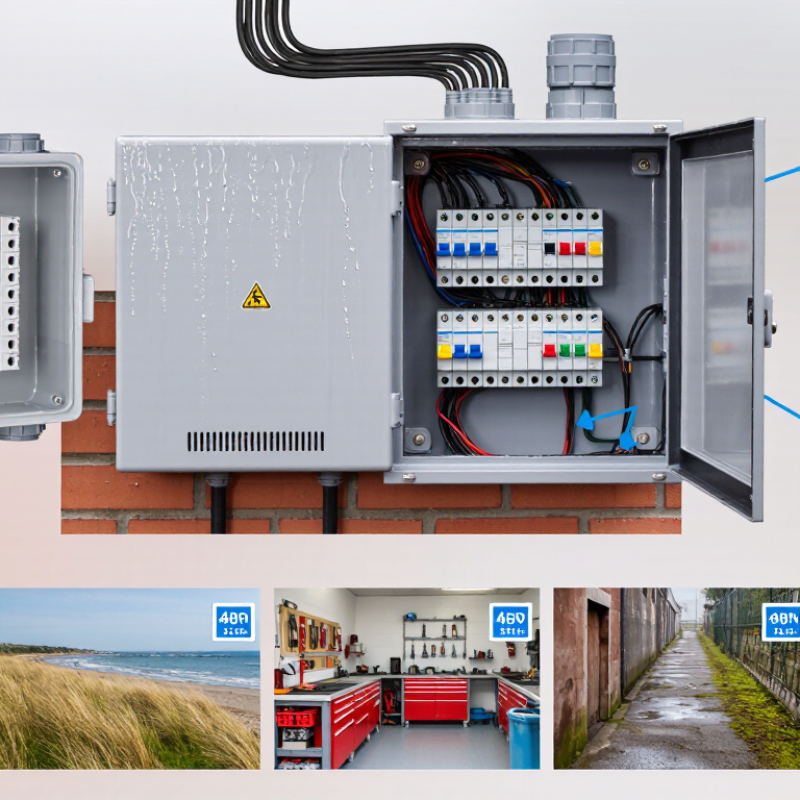
What Is the Best External Consumer Unit in 2026?

What an External Consumer Unit Is and How It Is Used

An external consumer unit is a weather-resistant electrical enclosure that distributes power to outdoor circuits. It is usually supplied from the main consumer unit inside a building. Depending on its design, it may contain protective devices such as circuit breakers and residual-current protection. These help disconnect a circuit when a fault occurs. It is not simply a waterproof box. The unit must suit the circuits, cable sizes, and conditions at its location.

People use one to supply garden lighting, an outbuilding, or outdoor equipment without routing every circuit directly from the indoor board. A qualified electrician can assess the expected load, cable route, earthing arrangements, and exposure to rain or sunlight. A sheltered wall can still become damp. Check that the enclosure’s protection rating suits the actual site, and keep it accessible for inspection and switching. I would not choose one by appearance alone; that is an easy mistake. The right specification depends on the installation, not just the number of ways available. Outdoor wiring also needs suitable protection and careful testing. Small details matter.

Key Safety and Weatherproofing Features to Consider

What Is the Best External Consumer Unit in 2026?

Key Safety and Weatherproofing Features to Consider

The best external consumer unit is not simply the one with the highest IP rating. Match its enclosure to the location: a sheltered wall differs from a wind-exposed, coastal position. IEC 60529 defines IP codes for tested resistance to dust and water, but a rating cannot account for every installation condition. For exposed locations, an electrician may specify IP65 or higher. Correct installation still matters. Small gaps matter.

Look for a UV-resistant, impact-resistant enclosure, secure cover fasteners, and cable glands sized to limit water entry. Check that the cover opens without straining cables and that condensation is considered without compromising protection.

The Met Office’s State of the UK Climate 2023 recorded 1,290.7 mm of UK rainfall, 11% above the 1991–2020 average. That national figure cannot predict conditions on one wall, but it highlights the need to assess local rain, splash, flooding, and drainage.

Even an elevated box can face spray from paving. The circuit needs suitable RCD protection, verified earthing, and clear labels; a qualified electrician should select and test the unit. A sealed-looking case is not proof of safety.

Inspect seals and glands periodically, especially after building work or impact, and replace damaged parts promptly.

Common Types and Configurations Available in 2026

External consumer units in 2026 commonly come as compact single-row or larger multi-row assemblies. Single-row units suit a few lighting and socket circuits; multi-row versions leave space for additional protection devices. You can also choose single-phase or three-phase configurations, depending on the supply and connected loads. Small details matter. A spare module can make later changes easier, though unused space alone does not guarantee a suitable design.

Protection arrangements vary. A main switch provides isolation, while RCDs or individual RCBOs can provide residual-current protection. The IEC 61439-3:2012 standard covers distribution boards for ordinary-person operation, with assembly rated current up to 250 A and outgoing circuits up to 125 A. For outdoor enclosures, IEC 60529 defines IP ratings: IP65 indicates dust-tight protection and resistance to water jets. That rating does not mean an enclosure can be submerged. Installation conditions still matter.

Tips: Check circuit capacity, cable-entry positions, and the enclosure’s stated outdoor rating before choosing. Ask a qualified electrician to confirm compatibility with the site supply and installation. A technically neat layout can still be awkward to maintain; inspect access and labeling, not just the number of ways.

Common External Consumer Unit Configurations in 2026

This illustrative checklist compares typical configurations: RCBO boards provide residual-current protection per circuit, while an SPD-equipped board adds surge protection. Actual specifications vary; choose an enclosure with an appropriate ingress-protection rating for its location and check compatibility with local electrical regulations.

How to Compare External Consumer Units by Performance

Choosing the best external consumer unit in 2026 starts with the conditions at the installation site. Compare the enclosure’s ingress protection, material strength, and resistance to sunlight and corrosion. A unit beside a garden tap may face splashes, dust, damp air, and temperature changes. Details matter. Check the lid seal and cable-entry points, including how unused openings are closed. A strong rating is less useful if the unit is poorly fitted.

Inside, compare the protective devices, circuit capacity, and space available for tidy wiring. Residual-current protection and circuit breakers must suit the installation; more modules do not automatically mean better performance. Ask a qualified electrician to check compatibility, expected load, earthing, and applicable local requirements. Safe maintenance access matters too.

Look for clear markings, accessible terminals, and enough room to route cables without tight bends. Cramped wiring can make inspection harder later. Comparisons sometimes focus heavily on enclosure size and overlook cable-entry details. That is an incomplete measure. Match the specifications to the actual site, then have a qualified professional assess the final choice.

What Is the Best External Consumer Unit in 2026? — How to Compare External Consumer Units by Performance

Performance Dimension What to Compare Strong Performance Indicators Why It Matters
Ingress protection Enclosure IP rating and the protection maintained with the cover closed and cable entries correctly fitted. IP65 means dust-tight protection and protection against water jets. IP66 offers protection against more powerful water jets. IP67 covers temporary immersion under specified test conditions. Rain, dust and wash-down exposure vary by installation. The rating applies under stated test conditions; it does not by itself guarantee protection after incorrect installation or damaged seals.
Location suitability Exposure to direct rain, sun, temperature changes, dirt, impact and possible standing water. A stated outdoor rating, durable construction and installation instructions that address the intended environment. An enclosure suitable for a sheltered wall may not be suitable for an exposed or flood-prone location. Position and installation details affect real-world performance.
Enclosure material and impact resistance Material, door and hinge construction, and any declared IK impact-protection rating. A clearly stated IK rating where impact resistance is important. For example, IK08 corresponds to a defined impact energy of 5 joules under the IK classification system. Impact resistance can matter in accessible areas, garages and outbuildings. An IK rating is separate from an IP rating and should not be inferred from enclosure material alone.
Protection against electric shock Whether the proposed circuit design uses appropriate RCD or RCBO protection, with suitable ratings and configuration. Protection selected for the installation in accordance with applicable wiring requirements. A 30 mA RCD is commonly used where additional protection is required; circuit-specific design still matters. RCD and RCBO protection can reduce the risk of electric shock, but device selection, circuit arrangement and testing must be appropriate to the installation.
Surge protection Whether a surge protective device (SPD) is included or can be fitted, and whether its type and rating suit the installation. Clear SPD specifications and installation guidance. Type 2 SPDs are commonly used in distribution boards for transient overvoltage protection; the required arrangement depends on the installation. Surge protection can help limit transient overvoltages, but it is not a substitute for correct earthing, bonding or circuit protection.
Capacity and spare ways Number of usable outgoing ways, module space, and provision for future circuits or protective devices. Enough ways for the planned circuits, with practical spare capacity and a documented layout compatible with the selected devices. Counting ways alone does not establish suitability. The electrician must also check the board’s design, device compatibility, loading and available space.
Rated current and thermal performance Declared assembly and busbar ratings, device ratings, and the effects of the enclosure’s operating conditions. Ratings are clearly stated and suitable for the calculated maximum demand and installation conditions. Do not assume that the sum of circuit-breaker ratings equals the usable supply capacity. Assessment should account for diversity, loading and manufacturer instructions.
Standards and documentation Applicable product standard, installation instructions, device compatibility information and test documentation. Documentation identifies conformity with the relevant requirements, such as BS EN 61439-3 for distribution boards intended to be operated by ordinary persons, where applicable. Standards and documentation help establish what the assembly is designed for. They do not replace verification of the completed installation.
Installation and maintenance Access for wiring and inspection, cable-entry arrangements, sealing, labeling and availability of replacement parts. Clear instructions for cable glands, entries, cover closure and inspection, with labels that remain readable after installation. Poor cable entry or an incorrectly closed cover can undermine the enclosure’s intended protection. Electrical installation and testing should be carried out by a qualified electrician.

Comparison tip: There is no single best external consumer unit for every property. Compare the complete installed assembly against the location, circuit design and applicable UK requirements; have a qualified electrician confirm the specification and installation.

Choosing the Right Unit for Your Property and Installation Needs

An external consumer unit is not simply an indoor unit with a weather-resistant lid. Its location matters. Check the enclosure’s ingress protection rating against rain, dust, and likely water spray. A sheltered wall beneath an eave faces different conditions from an exposed garden wall. The label alone is not enough.

Think about the property’s circuits and likely future needs. A small outbuilding may need fewer ways than a workshop with lighting, heating, and power tools. Leave appropriate capacity for planned additions, but avoid choosing a larger unit without a clear reason. Protective devices must suit the circuit design and installation conditions. An electrician can assess this; matching parts by appearance is risky. It is easy to overlook.

Also consider sunlight, corrosion, mounting height, and cable entry points. A unit that catches direct afternoon sun may age differently from one in steady shade. Water can travel along a cable, so entry and sealing details deserve attention. The wall should support the enclosure securely, with enough room for safe access and maintenance. Ask the installer how the chosen position affects inspection and future repairs. I would not assume the neatest-looking spot is the most practical one. Property layouts are rarely that tidy.