Best Capsule Pressure Gauge for Accurate Readings?
When it comes to measuring pressure accurately, the Capsule Pressure Gauge stands out as a reliable choice. Its design emphasizes precision and durability. Many industries depend on this gauge for essential applications in processes. Users often appreciate its simplicity in reading pressure levels. However, a few may find the calibration process challenging.
Choosing the right Capsule Pressure Gauge can significantly affect measurement outcomes. Factors like temperature sensitivity and range of pressure need consideration. Some users may face issues with reading accuracy under extreme conditions. This makes understanding specifications essential for effective use. A lack of attention to detail can lead to inaccurate readings, which are detrimental in critical scenarios.
Experts recommend regular maintenance for optimal performance. Neglected gauges might give unreliable data, posing safety risks. Each gauge is unique and may require specific attention. It’s vital to reflect on their care to enhance longevity and reliability. The right Capsule Pressure Gauge not only ensures accurate readings but also peace of mind in your operations.
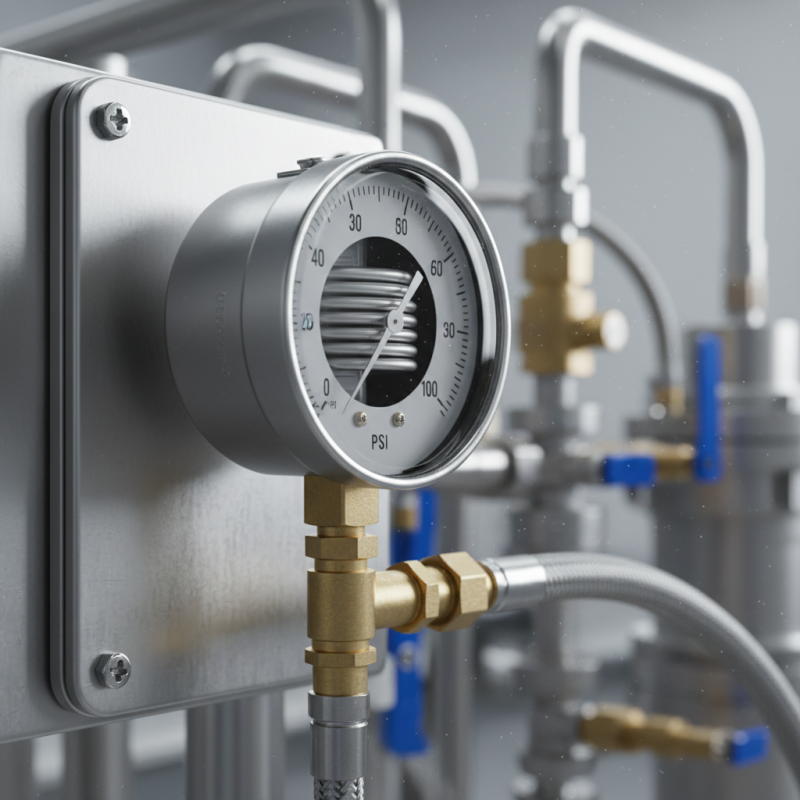
Choosing the Right Capsule Pressure Gauge: Key Considerations
When selecting a capsule pressure gauge, accuracy is paramount. A consistent measurement is vital in industries such as pharmaceuticals, food processing, and manufacturing. According to the American Society of Mechanical Engineers (ASME), measurement errors can lead to costly production downtime. Therefore, investing in a gauge that ensures precision is essential.
Consider the diaphragm material used in the construction of the gauge. Common materials include stainless steel and brass; each has unique properties impacting sensitivity and durability. A recent report from the International Society for Measurement indicates that the choice of material can affect the gauge's lifespan and the range of pressure it can reliably measure. Thus, assessing environmental factors is necessary for optimal performance.
Calibration frequency cannot be overlooked. Regular calibration ensures that readings remain accurate over time. Industry standards recommend calibration at least once a year. However, high-usage environments might require more frequent checks. This practice helps to mitigate discrepancies that could evolve into significant issues. Ignoring calibration can lead to an accumulation of inaccuracies, ultimately affecting operational efficiency.
Understanding the Mechanism of Capsule Pressure Gauges and Their Accuracy
Capsule pressure gauges are essential instruments for measuring pressure in various applications. Their mechanism relies on a thin, flexible capsule that deforms under pressure, providing direct readings. This design allows for relatively high accuracy. Research shows that capsule gauges can achieve readings within ±1% of the full scale, making them reliable in many settings. However, factors like temperature fluctuations and installation can impact accuracy.
Tips: Regular calibration is crucial. Check your gauge at least once a year. Proper installation ensures minimal error. Avoid exposing the gauge to direct sunlight, which can distort readings.
While capsule pressure gauges are generally reliable, not all applications suit their use. For example, in extreme conditions or for highly corrosive environments, other types of gauges may offer better results. Always assess your specific needs. This reflection can lead to choosing the most appropriate gauge for the job.
Tips: Consider the environment where the gauge will be used. Corrosive conditions may require special materials. Always consult technical specifications to ensure compatibility with your application.
Industry Standards for Calibration and Maintenance of Pressure Gauges
When selecting a capsule pressure gauge, understanding calibration and maintenance standards is crucial. The calibration process ensures that the gauge provides accurate readings. According to industry standards, pressure gauges must be calibrated at least once a year. This frequency helps maintain precision and safety in operations.
Calibrating your pressure gauge involves comparison with a reference gauge. The National Institute of Standards and Technology (NIST) recommends using a reference gauge with an accuracy of 0.1% or better. Regular maintenance checks can help identify wear and tear. It’s important to inspect the gauge for leaks, which can lead to inaccurate measurements over time.
Tip: Always document the calibration date and results. This practice enhances accountability and helps track the gauge's performance over time.
In some cases, users overlook environmental factors. Temperature fluctuations can affect readings. A sudden change in temperature may alter the gauge's accuracy. Therefore, storing gauges in a stable environment is essential.
Tip: Perform checks under controlled conditions to minimize errors. This approach ensures reliability and enhances your confidence in the readings you obtain.
Comparative Analysis of Top Capsule Pressure Gauge Brands and Models
When selecting the best capsule pressure gauge, it’s important to consider several brands and models. Each one has distinct features that cater to various needs. Some models excel in durability, while others focus on precision. The choice often hinges on the specific application and user requirements.
Comparative analysis shows that accuracy varies among models. Some gauges maintain consistent readings even under extreme conditions. Others may falter, especially if they are not calibrated regularly. An experienced user understands that proper maintenance can affect performance. Reliability in measurements is crucial for projects that depend on exact data.
Many users express dissatisfaction with their gauge options when they do not perform as expected. They note variations in readings that can lead to significant errors. This highlights the importance of research and user feedback when selecting a gauge. An informed choice can lead to better accuracy and, ultimately, improved outcomes in various projects.
Real-World Applications: How Accurate Readings Impact Various Industries
Accurate readings from capsule pressure gauges can significantly impact many industries. In the medical field, precise measurements are critical. For example, blood pressure monitors rely on accuracy for reliable patient assessments. A small deviation can lead to misdiagnosis or improper treatment, directly affecting patient health. This highlights the need for reliable instruments.
In manufacturing, pressure gauges are essential for quality control. In processes involving gases and liquids, accuracy ensures safety and product integrity. An inaccurate gauge can result in equipment failure, leading to costly downtimes. Workers may overlook potential hazards due to errors in readings. The consequences are often severe.
Moreover, industries like food and beverage must adhere to strict regulations. Accurate pressure readings ensure consistency and safety in production. Noncompliance can lead to recalls, resulting in financial losses and damage to brand reputation. Understanding how these instruments work is vital. Calibration and regular maintenance of these gauges are often neglected, leading to potential reliability issues.
Best Capsule Pressure Gauge for Accurate Readings? - Real-World Applications: How Accurate Readings Impact Various Industries
| Industry | Required Accuracy (%) | Common Applications | Typical Gauge Type |
| Oil & Gas | ±0.5% | Pressure monitoring in pipelines | Digital Pressure Gauge |
| Pharmaceutical | ±0.2% | Process validation and quality control | High Accuracy Gauge |
| Food & Beverage | ±1% | Brewery pressure monitoring | Analog Pressure Gauge |
| Aerospace | ±0.1% | Engine testing and performance evaluations | Precision Pressure Gauge |
| Manufacturing | ±0.5% | Hydraulic testing and machinery monitoring | Industrial Pressure Gauge |