What Is Anionic Polyacrylamide and How Is It Used?

Anionic Polyacrylamide is a water-soluble polymer used to gather fine particles into larger, heavier flocs. These flocs separate more easily during sedimentation, filtration, or sludge dewatering. The material usually carries negative electrical charges along its molecular chain. Its performance depends on molecular weight, charge density, water chemistry, and mixing conditions.

Professor Z. A. Zouboulis, a recognized water-treatment researcher, has stated, “Flocculation is a key step in water and wastewater treatment.” This principle explains why Anionic Polyacrylamide appears in municipal treatment, mineral processing, paper production, and industrial wastewater management. It does not simply “clean” water by itself. Instead, it helps suspended particles interact and form structures that equipment can remove.

Real applications require more than selecting a product from a catalogue. Operators often prepare a diluted solution, add it gradually, and observe floc size, settling speed, and filtrate clarity. Jar testing remains practical. A small dosage mistake can produce weak flocs, slimy residue, or poor separation. Excess polymer may also increase operating costs and complicate downstream handling.

The process is rarely perfect. Raw water changes with seasons, production schedules, and particle concentration. Therefore, dosage should be adjusted through testing, records, and experienced observation. This article explains what Anionic Polyacrylamide is, how it works, where it is used, and why responsible selection matters. It also considers limitations that product descriptions often overlook.
What Is Anionic Polyacrylamide and How Is It Used?

What Is Anionic Polyacrylamide?

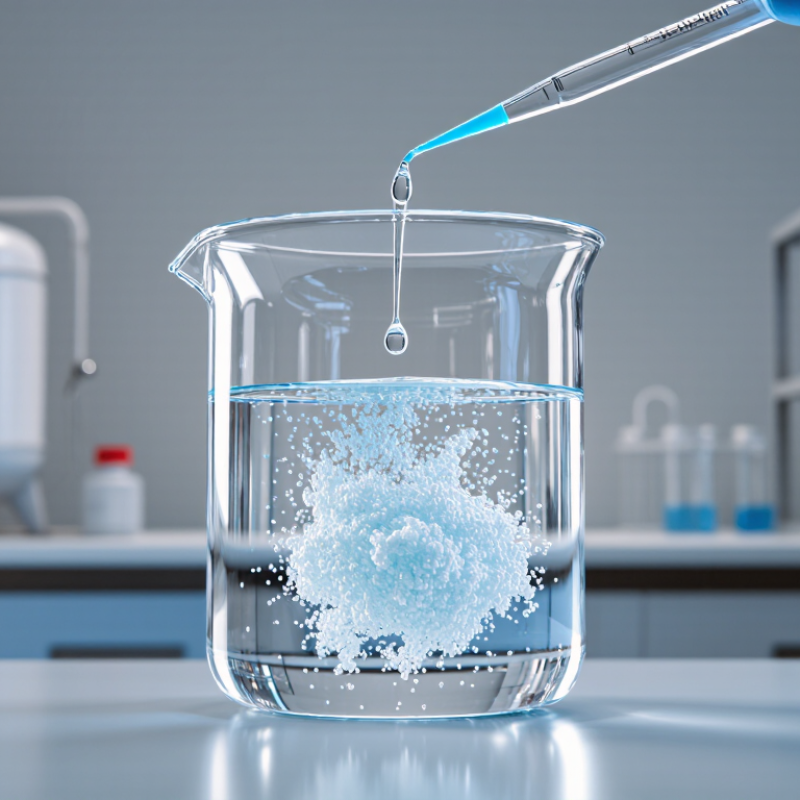
Anionic polyacrylamide is a water-soluble, high-molecular-weight polymer with negatively charged carboxylate groups. These charges attract positively charged sites on suspended particles. Its long molecular chains then connect particles into larger, heavier flocs. The material is usually supplied as a dry powder or emulsion, not as a ready-to-use solution. Charge density and molecular weight strongly affect performance.

In plant practice, operators dissolve it slowly before dosing. A prepared solution may look clear or slightly hazy. Gentle mixing helps prevent damaged polymer chains. In wastewater clarification, the polymer can improve settling and reduce suspended solids. Mining operations use it to clarify process water and thicken fine particles. Papermaking and sludge dewatering are also common applications. Jar testing remains essential. A higher dose is not automatically better.

Grand View Research estimated the global polyacrylamide market at about USD 5.6 billion in 2023, with continued growth projected through 2030. That figure covers several polymer types, including anionic grades, so it should not be treated as an anionic-only value. Industry guidance also stresses controlling residual acrylamide, because the monomer is hazardous even though the finished polymer behaves differently. Performance can change sharply with pH, salinity, mixing speed, and particle chemistry. Real systems are rarely as predictable as laboratory tests.

How Is Anionic Polyacrylamide Made and Classified?

Anionic polyacrylamide is produced by polymerizing acrylamide with acrylic acid or sodium acrylate. Manufacturers use aqueous solution polymerization, followed by drying, crushing, and screening. The resulting granules dissolve before use. Small processing changes affect performance.

Classification usually depends on charge density, molecular weight, and hydrolysis degree. Charge density describes the proportion of anionic groups along the polymer chain. Low-charge grades often support suspended solids removal. Medium and high-charge grades can improve sludge dewatering or mineral processing. Molecular weight also matters. High-molecular-weight polymers create longer bridges between particles, while lower grades may disperse more easily.

The boundary is not always tidy. Some technical documents use charge percentage, while others use hydrolysis degree. These terms should not be treated as identical without checking the test method. A practical specification should list viscosity, residual acrylamide, moisture, particle size, and charge value.

The 2024 Grand View Research assessment places water treatment among the leading polyacrylamide applications. It also estimates the global market will expand at roughly 6% annually through 2030. That growth reflects stricter water-quality management and expanding industrial wastewater treatment. However, market demand does not guarantee field performance.

Jar testing remains essential. Operators should compare several dosages using the actual water, sludge, temperature, and mixing conditions. Excess polymer can produce weak, slippery flocs. This is easy to overlook. WHO guidance also emphasizes controlling residual acrylamide in treated materials, making supplier testing and documented quality control necessary.

What Is Anionic Polyacrylamide and How Is It Used? – How Is Anionic Polyacrylamide Made and Classified?
Data Dimension Classification or Parameter Factual Description Typical Function or Application
Material Type Water-soluble synthetic polymer Anionic polyacrylamide, commonly abbreviated as APAM, is a water-soluble polymer containing acrylamide units and negatively charged carboxylate groups. Used as a flocculant, thickening aid, filtration aid, and rheology modifier in water and process-treatment systems.
Chemical Structure Acrylamide-acrylate copolymer or partially hydrolyzed polyacrylamide The polymer backbone is formed from acrylamide-based repeating units. Anionic groups are introduced through copolymerization with acrylic acid or acrylate monomers, or by partial hydrolysis of polyacrylamide. The negatively charged sites promote interaction with positively charged particles and dissolved multivalent ions.
Appearance Dry powder, granule, or aqueous solution Commercial APAM is commonly supplied as a white to off-white powder or granular solid. It can also be prepared as a diluted aqueous solution before use. Dry products are convenient for storage and transport; solutions allow direct dosing into treatment equipment.
Charge Type Anionic When dispersed in water, the polymer carries a net negative charge because of its carboxylate or related anionic groups. Particularly suitable for suspensions containing positively charged or metal-hydroxide particles.
Anionic Degree Low, medium, or high The anionic degree indicates the approximate proportion of charged groups along the polymer chain. The boundaries between low, medium, and high grades are not universal and vary by supplier and application. Charge selection is matched to particle surface chemistry, water composition, pH, and the required settling or dewatering performance.
Molecular Weight Low, medium, or high APAM grades are also classified by molecular-weight range. Higher molecular weight generally provides longer polymer chains and stronger bridging potential, while lower molecular weight may provide faster dispersion and different flow behavior. High-molecular-weight grades are often selected for flocculation and solid-liquid separation; lower grades may be used where viscosity or rapid mixing is important.
Main Manufacturing Route Free-radical polymerization Acrylamide and an anionic comonomer, such as acrylic acid or an acrylate salt, are polymerized in an aqueous or other controlled reaction system using a suitable initiator. The process creates polymer chains with a controlled balance of molecular weight, charge density, and product form.
Post-Treatment Drying, grinding, screening, and packaging After polymerization, the gel or polymer mass is typically dried under controlled conditions, milled or granulated, screened to obtain a suitable particle size, and packaged as a dry product. These steps improve handling, dissolution consistency, and dosing control.
Dissolution Behavior Slowly dissolving in water APAM should generally be added gradually to water with gentle agitation. Excessive shear, very high temperature, or poor dispersion can reduce dissolution quality or damage polymer chains. Proper preparation helps prevent fish-eyes, clumping, incomplete activation, and unstable treatment results.
Flocculation Mechanism Adsorption, charge interaction, and polymer bridging The polymer adsorbs onto particle surfaces and can connect multiple particles into larger, stronger flocs. Electrostatic interactions and bridging effects both contribute to separation. Improves the settling, clarification, thickening, and filtration of suspended solids.
Municipal and Industrial Wastewater Solid-liquid separation APAM can assist in aggregating suspended solids and improving the removal of sludge particles from treated water. Used in sludge thickening, sludge dewatering, dissolved-air flotation support, and clarification processes.
Mining and Mineral Processing Tailings and concentrate treatment The polymer can promote aggregation of fine mineral particles and improve the separation of solids from process water. Applied in tailings thickening, sedimentation, filtration, and process-water clarification.
Paper and Pulp Processing Retention and drainage aid APAM can interact with fibers, fillers, and fine particles in papermaking systems. May improve retention of fine materials, drainage, formation control, and recovery of process water.
Oil and Gas Operations Water treatment and mobility control Selected polyacrylamide formulations can modify water viscosity and influence the movement of water through porous formations. Application performance depends strongly on salinity, temperature, hardness, and reservoir conditions. Used in some enhanced-oil-recovery programs and in treatment of produced water, subject to process-specific evaluation.
Soil and Construction Applications Erosion and sediment control APAM can bind or aggregate fine soil particles and reduce the transport of suspended sediment in water runoff. Used in selected irrigation, land-management, earthwork, and construction-site sediment-control practices.
Key Selection Factors Charge density, molecular weight, pH, salinity, and dosage Performance depends on the polymer grade and the characteristics of the treated water or slurry, including particle concentration, particle size, temperature, pH, and dissolved salts. Jar tests, settling tests, or dewatering trials are commonly used to determine the most suitable grade and dose.
Handling Considerations Spill and slip control Dry APAM powder and concentrated solutions can make floors and equipment extremely slippery when wet. Dust generation should also be minimized during handling. Use appropriate ventilation, protective equipment, careful housekeeping, and controlled dosing procedures.
Note: Exact molecular-weight ranges, anionic-degree categories, recommended dosage, and operating conditions are application-specific and should be confirmed through laboratory or pilot testing.

What Properties Make It Useful in Water Treatment?

Anionic polyacrylamide is a water-soluble polymer with negatively charged functional groups. Its high molecular weight helps connect fine particles into larger, heavier flocs. This bridging action improves settling, filtration, and sludge dewatering. The U.S. Environmental Protection Agency describes polymer aids as useful for improving sedimentation and residuals handling in treatment plants (EPA, Water Treatment Plant Residuals Management Technical Report, 2011).

Its performance depends on charge density, molecular weight, mixing intensity, and water chemistry. In a clarifier, the polymer can gather clay, suspended solids, and metal hydroxide particles into visible flocs. These flocs settle faster and may release clearer water above the sludge blanket. Small doses matter. Excess polymer can create slimy particles, hinder filtration, or leave unwanted residuals. Jar testing remains essential because laboratory results may not match full-scale conditions.

The need for efficient treatment is growing. UNESCO’s World Water Development Report 2024 states that agriculture represents approximately 70% of global freshwater withdrawals. Better solid-liquid separation can reduce water losses and support reuse, especially in high-demand operations. Still, anionic polyacrylamide is not a universal answer. Some particles carry the wrong surface charge, and highly saline water can change floc strength. Operators should review residual monomer specifications, use validated dosing equipment, and monitor turbidity continuously. In practice, the best result is often a compromise between clear water, firm sludge, and chemical consumption. That compromise deserves regular rechecking.

What Is Anionic Polyacrylamide and How Is It Used?

Anionic polyacrylamide is a high-molecular-weight, water-soluble polymer used as a flocculant and filtration aid. Its negatively charged polymer chains adsorb onto suspended particles and connect them into larger, faster-settling flocs. The chart shows typical working-dose ranges used in different water-treatment applications.

Actual dosage depends on particle concentration, pH, alkalinity, temperature, mixing conditions, polymer molecular weight, and charge density. These ranges are general operating references; jar testing and pilot testing should be used to determine the optimum dose.

How Is Anionic Polyacrylamide Used in Different Industries?

What Is Anionic Polyacrylamide and How Is It Used?

Anionic polyacrylamide is a water-soluble polymer used to gather fine suspended particles into larger, heavier flocs. These flocs settle faster or separate more easily during filtration. Its negative charge works well with positively charged particles, including many mineral solids and metal hydroxides. Operators usually prepare a dilute solution and feed it through controlled dosing equipment. Small changes matter. Excess polymer can leave a slippery residue, increase operating costs, or produce weak flocs. Jar testing remains essential because water chemistry changes from site to site.

How Is Anionic Polyacrylamide Used in Different Industries?

In municipal and industrial wastewater plants, the polymer supports clarification, sludge thickening, and dewatering. A 2024 UNESCO World Water Development Report notes that agriculture accounts for about 70% of global freshwater withdrawals. This pressure makes efficient water recovery increasingly important.

In mining, anionic polyacrylamide helps settle clay, silica, and fine ore particles in thickener tanks. In mineral processing, clearer recycled water can reduce freshwater demand. Paper mills use it to retain fibers and fillers, improving drainage on forming screens. Construction sites apply it to control sediment in runoff, especially near exposed soil. Agriculture may use it in irrigation channels to reduce soil erosion and suspended sediment.

Results vary. Temperature, pH, mixing energy, and particle size can change performance dramatically. Field experience should guide adjustments, but laboratory testing should challenge assumptions.

What Factors Affect Its Selection and Application?

What Is Anionic Polyacrylamide and How Is It Used?

Anionic polyacrylamide is a water-soluble polymer used to gather fine particles into larger flocs. It supports solid-liquid separation in wastewater treatment, mineral processing, paper production, and soil management. Its negatively charged chains interact with positively charged sites on suspended particles. This improves settling, clarification, filtration, and water recovery.

What Factors Affect Its Selection and Application?

Selection depends on charge density, molecular weight, particle type, and water chemistry. A high-molecular-weight grade may form strong flocs, but it can perform poorly in highly sheared equipment. Charge density also matters. Too little charge may leave particles dispersed, while excessive charge can produce weak or slimy flocs. pH, salinity, temperature, and dissolved metals can change performance.

Jar testing remains essential. Begin with several polymer concentrations, mix gently, and observe floc size, settling speed, and filtrate clarity. Our first estimate can be wrong. A dosage that works in the morning may shift after rainfall changes the feed solids.

Polymer preparation also affects results. Allow adequate hydration, avoid aggressive mixing, and use the solution within its practical working period. Operators should record dosage, mixing energy, water conditions, and sludge texture during each trial. Small details matter.

Safe handling requires suitable protective equipment and controlled dust exposure. Overdosing can increase costs and create sticky sludge, while underdosing leaves cloudy water. The best choice is usually the lowest effective dose confirmed under real operating conditions.