What is Aerogel Fabric and Why is it Important for Industry?
Aerogel Fabric is a groundbreaking material that has captured the attention of industry leaders. Dr. Emily Carter, a renowned expert in advanced materials, states, “Aerogel Fabric is reshaping the future of insulation and lightweight applications.” This innovative material is known for its remarkable properties. It is light as a feather yet possesses superior thermal resistance.
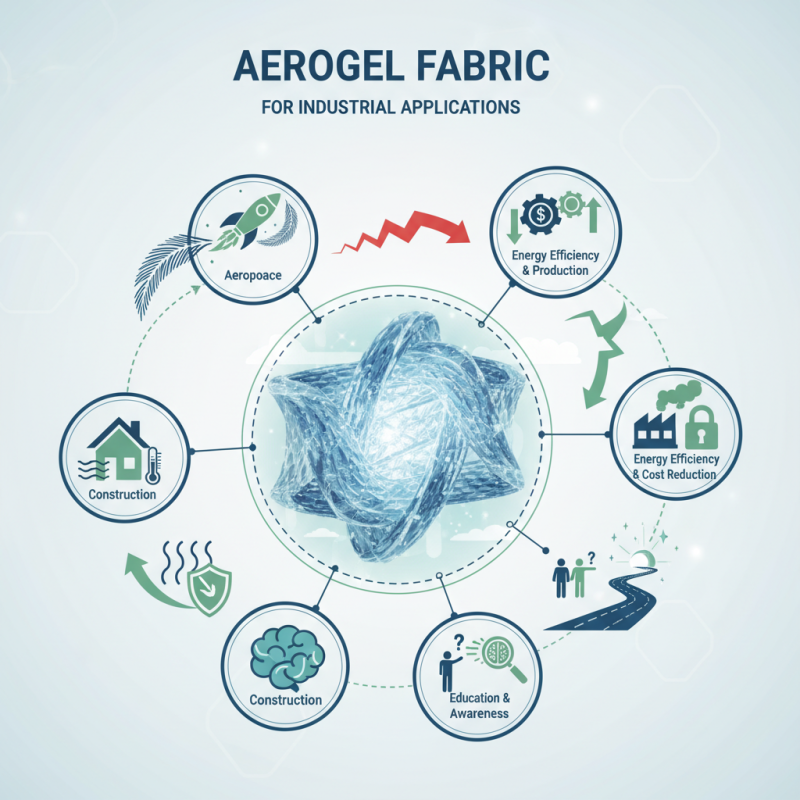
Aerogel Fabric has diverse applications across multiple industries. Its lightweight nature makes it ideal for aerospace, while its thermal efficiency is crucial for the construction sector. Companies are increasingly adopting this material to improve energy efficiency and reduce costs. However, the production of Aerogel Fabric can be complex and costly.
Despite its advantages, challenges remain. Many industries are still unaware of its full potential. Education and awareness are necessary to drive further adoption. As we explore Aerogel Fabric, the journey is just beginning, with much room for growth and innovation.
What is Aerogel Fabric?
Aerogel fabric is a groundbreaking material known for its unique properties. It is an ultra-lightweight substance that consists mostly of air. Created from a gel, aerogels retain their solid structure while being incredibly porous. This feature makes them excellent insulators. They can withstand extreme temperatures, making them ideal for various applications in aerospace and construction.
The process of making aerogel is complex. It involves supercritical drying, which removes the liquid from the gel without collapsing its structure. This technique requires precision and expertise. The result is a material that is not only lightweight but also incredibly strong for its size. While aerogel's impressive qualities make it attractive for industries, its production can be costly and time-consuming. Research continues to improve the manufacturing process to reduce expenses and enhance practicality.
In many cases, the ability of aerogel fabric to insulate against heat translates into real benefits. For instance, it can help keep sensitive equipment safe in extreme conditions. However, the durability of aerogel fabrics under mechanical stress varies. There is still much to learn about how they behave under different environmental influences. Scientists and engineers are exploring better formulations to maximize their potential without compromising performance.
The Composition and Properties of Aerogel Fabric
Aerogel fabric is a remarkable material known for its unique composition and properties. Composed primarily of silica, aerogel contains up to 99.8% air, creating a substance that is light yet highly effective as an insulator. This porous structure gives aerogel fabric low thermal conductivity, making it invaluable in applications that require temperature control, such as in spacecraft and industrial insulation.
The versatility of aerogel fabric also stems from its strength despite its lightweight nature. This material can withstand various stresses, making it suitable for numerous industries, from construction to aerospace. However, one must consider its sensitivity to moisture. Aerogel can lose its insulating properties when exposed to water, signaling the need for protective coatings in certain applications. While its future in various sectors seems promising, challenges in production scalability and cost-efficiency need deeper exploration for broader adoption.
What is Aerogel Fabric and Why is it Important for Industry?
| Property | Description | Importance in Industry |
| Lightweight | Aerogel is one of the lightest solid materials known, primarily composed of air. | Enhances transport efficiency and reduces energy consumption in various applications. |
| Insulation | Aerogel has very low thermal conductivity, providing excellent heat insulation. | Widely used in construction, aerospace, and temperature-sensitive industries. |
| Transparency | Aerogel can be made transparent, allowing light to pass through. | Ideal for applications in optics and lighting without heat loss. |
| Environmental Resilience | Aerogel is resistant to extreme temperatures, fire, and moisture. | Enhances safety and longevity of products in harsh environments. |
| Versatility | Can be combined with various materials for advanced applications. | Used in diverse fields like medicine, manufacturing, and electronics. |
Key Applications of Aerogel Fabric in Various Industries
Aerogel fabric is revolutionizing multiple industries with its remarkable properties. This lightweight and highly insulative material is not only valuable for thermal management but also demonstrates exceptional durability. In construction, aerogel acts as an effective insulator, reducing energy costs while enhancing building performance.
In the aerospace sector, aerogel fabric plays a pivotal role. It is used in spacecraft insulation, keeping components safe from extreme temperatures. This helps to balance weight and protection, crucial for mission success. Additionally, aerogel is finding its place in wearable technology. Its lightweight nature allows for enhanced comfort while providing insulation in outdoor gear.
Despite its advantages, there are challenges in working with aerogel. Its fragile nature can pose issues during manufacturing and application. Ongoing research aims to improve its mechanical properties. The future of aerogel fabric holds promise, but achieving optimal durability remains a focus.
Advantages of Using Aerogel Fabric Over Traditional Materials
Aerogel fabric is revolutionizing many industries with its unique properties. One of its key advantages is its incredible thermal insulation. This fabric is lighter than traditional materials, making it easier to handle. It can resist extreme temperatures while remaining thin and lightweight. This attribute is invaluable for applications in aerospace and construction, where managing thermal transfer is critical.
Another important point is its durability. Aerogel fabric is resistant to moisture and does not degrade easily. This longevity means less frequent replacements, which can reduce costs over time. Companies benefit from using this material, as its strength adds value to products. While the initial investment may seem high, the long-term savings are often significant.
However, there are challenges to consider. The production process of aerogel fabric can be complex and expensive. Not all manufacturers can access the necessary technology. This can limit its widespread adoption. Companies must weigh cost against performance to make informed decisions. The journey to fully integrate aerogel into mainstream use is ongoing.
Future Developments and Innovations in Aerogel Fabric Technology
Aerogel fabric has captured attention in various industries due to its unique properties. With advancements in technology, future developments are set to enhance its applications. Researchers are exploring ways to improve its thermal insulation and mechanical strength. These enhancements could lead to more efficient energy solutions in construction and manufacturing.
Innovations are also focusing on making aerogel fabrics more environmentally friendly. Biodegradable options may soon replace traditional synthetic fabrics. Such changes could reduce waste and promote sustainability. Moreover, breakthroughs in aerogel composites could allow for lighter, stronger materials in aerospace and automotive sectors.
Challenges remain in achieving scalability and cost-effectiveness. Not all aerogel products are affordable for widespread use. As the technology matures, these issues need addressing. Future developments should aim not only for performance but also for accessibility. Balancing innovation with practical application is essential for the industry’s growth.